
Living in Cancun: Guide for Digital Nomads and Expats
Thinking about living in Cancun as a digital nomad or expat? I’ve done it, and I’ve got the inside scoop.
Cancun was my first stop when I started my digital nomad life. And let me tell you, living in Cancun is a very different experience from staying in a resort in the Hotel Zone.
This guide is based on my own time living in Cancun, not just passing through. So if you’re wondering whether this city is the right fit for you, here’s what it’s really like.
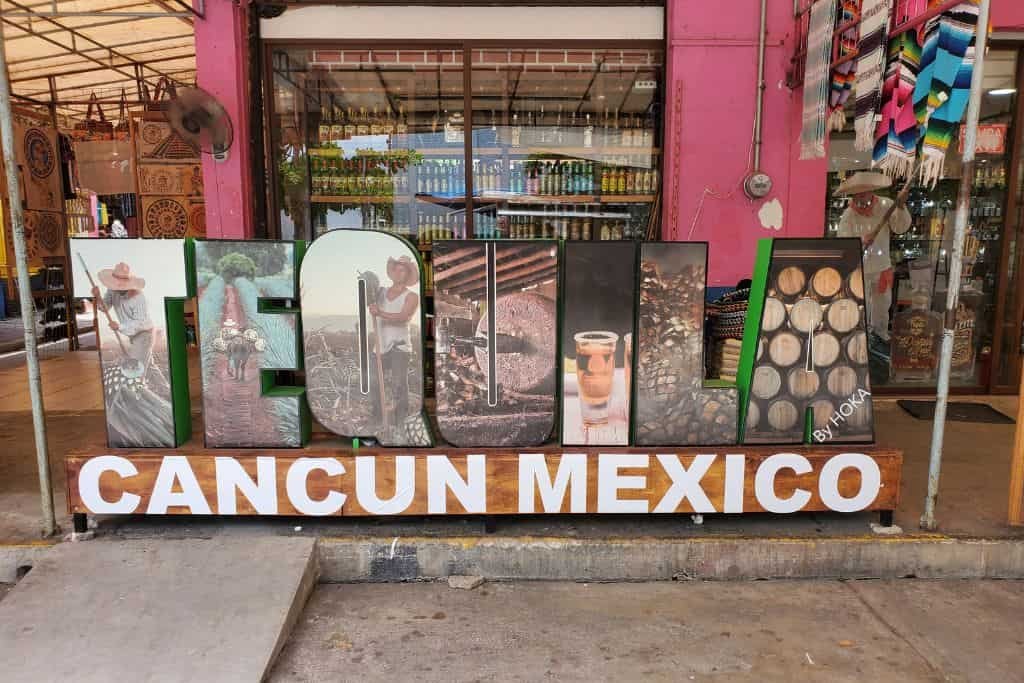
Why Cancun?
Cancun gets a lot of attention for its beaches, resorts, and spring break chaos. It’s also a good choice for long-term living.
It offers:
- Affordable cost of living
- Fast, reliable internet
- Great food (yes, even beyond tacos)
- Friendly locals
- Easy access to other parts of Mexico and Central America
It’s not perfect. But if you’re looking for a livable city with Caribbean vibes and solid infrastructure, it checks a lot of boxes.
Is Cancun Safe?
There’s some crime in Cancun, mostly petty theft. That’s not unique to Cancun. It’s just part of being in a tourist-heavy city.
Most residents and visitors never have any problems. Just don’t flash expensive jewelry or wander around drunk in unfamiliar areas at 2 a.m.
I lived in a local neighborhood and never felt unsafe. Cancun is much more than the Hotel Zone. Once you get out of the tourist bubble, you’ll see it’s a real city with real people going about their lives.

Cost of Living in Cancun
Cancun is much more affordable than most U.S. cities. Here’s a quick look at what I actually spent:
- Rent: I paid $600 USD per month for a one-bedroom Airbnb in a local neighborhood. It included Wi-Fi, weekly cleaning, bottled water, and even AC and utilities. You can also find some good coliving spaces in Cancun.
- Food: A good meal at a local spot was often under $5. I found that if the menu is in English, prices are about double.
- Transportation: Buses are 10 pesos (about $0.50 USD). Taxis vary but are pretty reasonable. DiDi and Uber exist but aren’t always reliable.
- Utilities: Watch the AC. If you blast it all day, your electricity bill will skyrocket. Some Airbnbs limit electricity use. Read the fine print.
Cancun Weather
It’s hot and humid year-round. The “cool” season runs from November to April. Rainy season is May through October, but it rarely rains all day.
I lived there in August. It was hot, which I was okay with, but the sargassum (seaweed) on the beaches was rough. It stinks (although my dog loved it!).
Resorts try to keep their beaches cleared of sargassum, but the public beach near my house and the dog beach were terrible.

Best Areas to Live in Cancun
Airbnb vs. Local Rentals
I stayed in an Airbnb, and it was the right call for me. It might cost a bit more than renting from a local, but it came stocked with essentials like toilet paper, dish soap, and drinking water.
Also, I got weekly cleaning, and fresh towels and sheets. To be fair, that’s the only place I’ve lived so far that came with cleaning services.
If you’re trying to cut costs and stay longer, local rentals can be cheaper. Just know you’ll probably be handling your own utilities and setup.
Lombardo Toledano: My Neighborhood
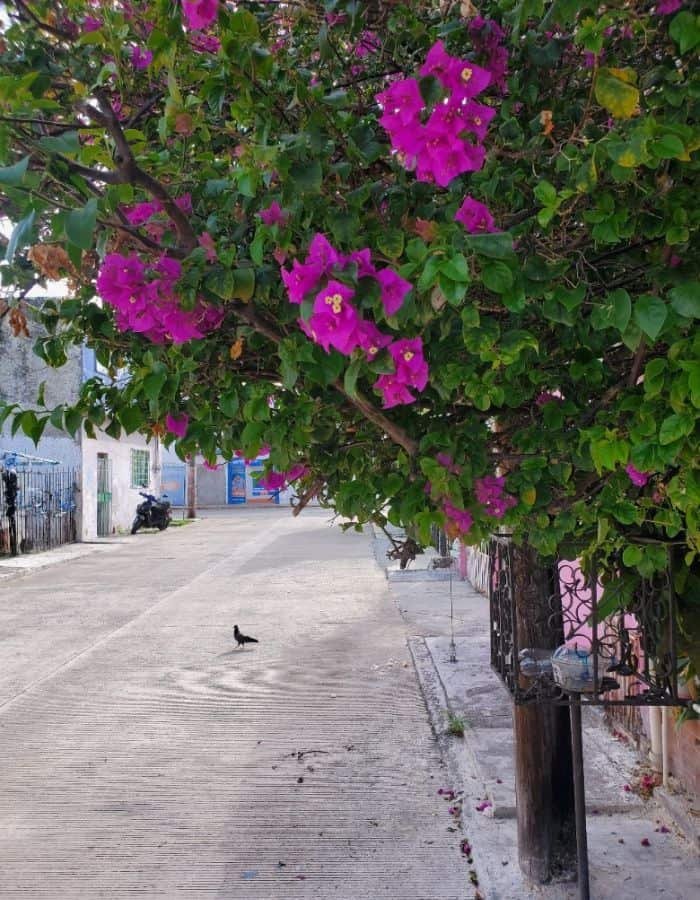
I lived in Lombardo Toledano, one of the oldest neighborhoods in Cancun. It’s near Puerto Juarez, where you catch the ferry to Isla Mujeres, and has a small-town feel. Most locals don’t speak English, but they’re patient and kind.
Shelby (my dog) and I stayed at Casa Ancestral, which I highly recommend. The courtyard was her favorite hangout spot. I didn’t have a car and didn’t need one. Buses and taxis were always nearby.
There’s great food around here. Don’t miss the shrimp pastor tacos at Pescado Loco.
El Centro (Downtown Cancun)

El Centro is the heart of “real” Cancun. It’s busy, fun, and full of personality. Technically, it includes neighborhoods like mine.
Avenida Tulum is a main drag with everything from street tacos to big-box stores like Walmart, Costco, and Petco.
You’ll find nightlife, street vendors, movie theaters, and co-working cafes. It’s not quiet, but it’s got energy and good value for your money.
I always felt safe here, although I wouldn’t wander around downtown at night.
Internet
If you work online, the good news is that Cancun has reliable internet. I had zero issues with Zoom calls, uploading videos, or streaming Netflix while scrolling Instagram.
Many Airbnbs and rentals include high-speed internet, but always double-check before booking. Ask the host for an actual speed test screenshot if you’re staying long term.
There are also plenty of cafes and co-working spaces with good Wi-Fi. Just remember, if you’re working from a coffee shop, buy something and be a respectful guest.
If you’re going to be there for a few hours, check with the staff first. Smaller spots survive on turnover.
It’s always a good idea to have a backup personal Wi-Fi device in your equipment just in case you can’t find strong internet.
Healthcare in Cancun

Medical care in Cancun is excellent and surprisingly affordable. It’s one of the reasons a lot of expats settle here.
A visit to the doctor costs around $30 USD. Prescriptions are cheap, and many are available over the counter. Specialists may charge more, but prices are still low compared to the U.S.
There are several modern clinics and hospitals with English-speaking staff. Pharmacies are everywhere, and most are stocked with everything you might need.
Even though care is affordable, I still recommend having travel insurance. I use SafetyWing. It’s easy, covers a lot, and gives me peace of mind.
You can also find affordable digital nomad health insurance if you’re going to be out of the United States for an extended period of time.
Staying Healthy
You can shower and cook with tap water in Cancun, but don’t drink it. I brush my teeth with bottled water and use Microdyne to disinfect fruits and veggies. It’s in most grocery stores near the produce section.
Even with fruit you plan to peel, clean the outside first. When you cut into it, bacteria can transfer to the inside.
Restaurants use purified water for ice, so you don’t need to worry about that. I carry hand sanitizer and tissues in case I end up in a restroom without any paper.
Pro tip: Always keep small change on you. Most public restrooms charge a few pesos. If someone hands you tissue paper, tipping five or ten pesos is appreciated.
Getting Around Cancun
Airport Transfers
Cancun International Airport is one of Mexico’s busiest. When you arrive, I recommend booking a shuttle ahead of time. Cancun Airport Transportation has been my go-to.
If you don’t pre-book, you can grab a taxi once you’re outside the terminal. Private drivers meet you just past the exit in the “Friends and Family” area. Just follow the crowd and you’ll find them.
Taxis
Taxis are everywhere. Always agree on a price before you get in. I’ve had rides that felt like a steal and others that felt overpriced because I misheard the fare. Always clarify.
Local Buses
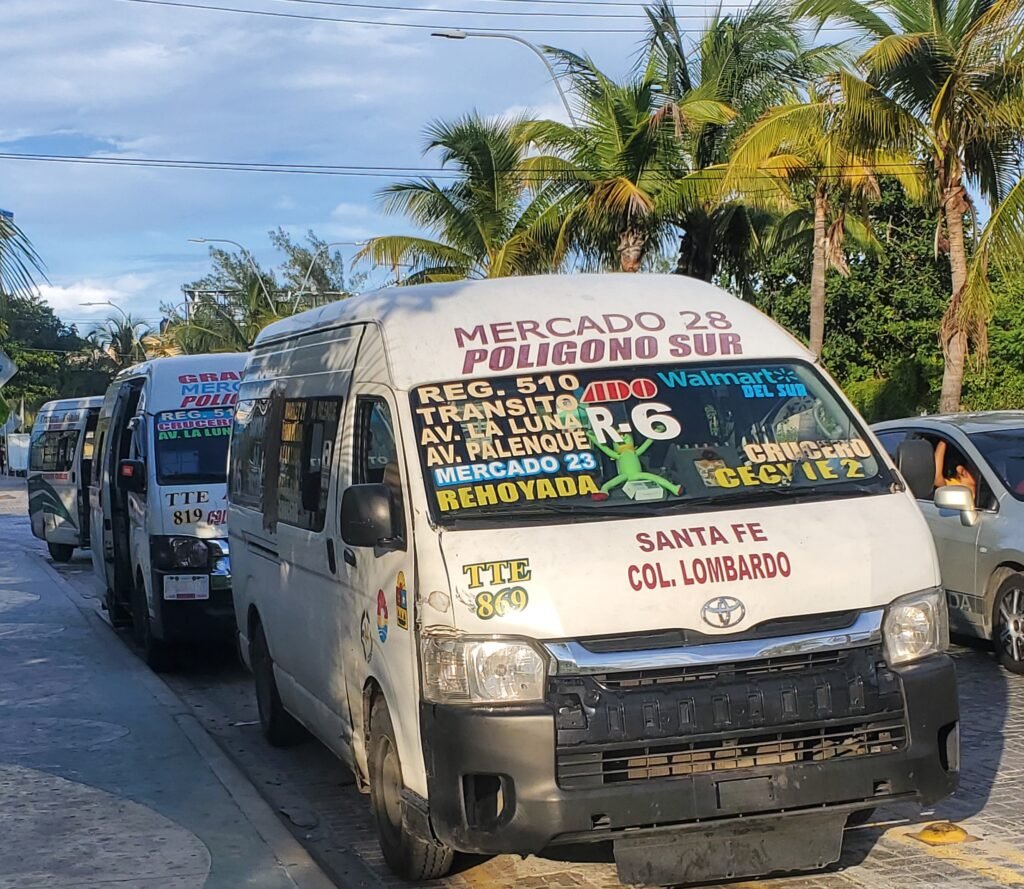
Buses in Cancun are cheap and efficient. You’ll pay about 10 pesos ($0.50 USD). There are two types: large blue city buses and small white vans. Both go to the same areas.
There are official bus stops, but you can also flag one down from the sidewalk. Look at the sign in the front window to see the route.
Once on board, tell the driver your stop. Some remember, but I like to follow along with Google Maps so I know when to get off. You can say “La esquina, por favor,” which means “at the corner, please.”
If you’re confused about routes, try the Moovit app. It’s not perfect, but it’s the best thing I’ve found for figuring out Cancun’s bus system.

App-Based Rideshares
Didi is a very popular rideshare app. They also have food delivery (like Uber Eats). I tried to use Didi twice and was unsuccessful in getting a ride. But you should still download the app and try it out. Other people have great success with it.
There is also Uber in Cancun. I found it to be cheaper than Didi when I compared the two. The prices fluctuate, but when I did use Uber, I thought it was pretty inexpensive.
Travel Outside Cancun

If you’re heading out of Cancun, ADO buses are a great option. These are big, comfortable buses with air conditioning and bathrooms.
You can buy tickets at the station or online. I recommend using their website, called Busbud, to check schedules and book in advance.
I’ve taken ADO buses several times. They’re cheap, safe, and much easier than renting a car if you’re just doing a day or weekend trip. I’d use them a lot more, but they don’t allow dogs.
Car Rentals
Of course, you can always rent a car. Renting cars in Mexico is quite easy. But be aware that you are required to purchase insurance. Car prices will look super cheap, but once insurance is added on, the total cost is ten times what you were expecting.
I highly recommend using Discover Cars. I have personally saved hundreds of dollars using them. They offer insurance that is separate from the rental, but just as valid, for a fraction of the cost.
Things to Do In and Around Cancun
Even while working full-time, I made time to explore. There’s a lot more to do than just sip margaritas on the beach. Though that’s not a bad way to spend a Saturday either.
Beaches

Cancun has several public beaches you can use for free. If you want more services, there are plenty of beach clubs where you can get beachside service. They charge a fee to use the lounge chairs and umbrellas.
Some also have a minimum food and drink amount. Overall, the fees are pretty reasonable for the great services you get.
You can also check into getting a day pass from a resort. This way, you get all the benefits of a nice resort without all the costs.
Keep in mind that during the summer months, sargassum is a problem on many Cancun beaches. This seagrass comes in daily. One day, a beach can be clear, and the next it’s covered with smelly sargassum.
The nice resorts keep the beaches clear of sargassum. The public beaches, on the other hand, usually do not.
Dog Beaches
Dogs are not allowed on beaches in Cancun with one exception, Playa Coral.
Playa Coral is also called Playa Mascota. In theory, it’s a really nice beach. There are clean restroom facilities and benches with dog water dishes built right in. There are also palapas for shade.
I say “in theory” because when I took Shelby there, it was completely full of sargassum. The smell was terrible. To be fair, Shelby loved it. But then, smelly stuff is like a magnet to her.
I’m sure when there is no sargassum, it’s a wonderful place to take your dog. Also, it has wheelchair-accessible decks, which I haven’t seen much of in Mexico.
Isla Mujeres

A quick 30-minute ferry ride from Puerto Juarez gets you to Isla Mujeres. It’s a great day trip.
You can swim and relax at Playa Norte, rent a golf cart to cruise the island, or book a snorkeling tour. The reefs around Isla are some of the best in Mexico.
There’s also a dog-friendly beach on the island, but it’s on the rougher Caribbean side. Great for views, not ideal for swimming.
Cenotes

One of the best things about living in this part of Mexico is easy access to cenotes.
These are natural sinkholes that open into freshwater pools. Some are open-air and perfect for swimming. Others are part of massive underground cave systems. You can even go scuba diving in many cenotes.
My favorite is Casa Tortuga. You can float, snorkel, or kayak. Even just hanging out in the cool water is a perfect way to escape the heat.
Mayan Ruins

If history is your thing, the Yucatán is full of ancient Mayan sites.
- Chichén Itzá is the big one. It’s about two hours from Cancun and a UNESCO World Heritage Site. If you want a full day trip with a cenote stop, there are plenty of tours that bundle both.
- Cobá is more rugged and less touristy. You can rent a bike and explore at your own pace.
- Tulum sits right on the coast. The views are stunning. It’s smaller, but the backdrop makes up for it.
- El Rey is in Cancun’s Hotel Zone. Small but interesting if you’re short on time.
- El Meco is near Puerto Juarez. When I went, I was the only person there. It’s peaceful, but bring bug spray.
Living in Cancun With a Dog

Traveling with a dog comes with a unique set of challenges, but Cancun was surprisingly dog-friendly.
Most restaurants and shops are open-air, so Shelby came with me almost everywhere. Dogs are also welcome on the ferry to Isla Mujeres.
I didn’t take her on a bus, but I’m sure it would’ve been fine if she was in her carrier. Taxis were never an issue. She’s small, though. Getting around with a big dog may be more difficult.
The biggest thing to be aware of is the heat. It takes dogs a while to adjust. I kept our walks short and made sure she stayed hydrated. I also brought dog booties to protect her paws from hot pavement.
There are a lot of street dogs in Cancun. That made me nervous at first, but we never had any problems. If I saw one approaching, I picked Shelby up. Most ignored us or just gave a friendly sniff.
Do I Need a Visa?
If you’re from the U.S. or Canada, you don’t need a visa to visit Mexico. You’ll usually be given a tourist permit good for up to 180 days.
The keyword there is “up to.” You’re not guaranteed 180 days. Sometimes immigration officials want to see an onward ticket or a reason for your stay.
I always recommend arriving prepared with a return flight or proof that you’ll be traveling to another country.
Staying in Mexico For Longer Than 180 Days
If you plan to stay in Mexico longer, apply for temporary residency. It’s not hard, but it does take time and paperwork. Start the process at a Mexican consulate in your home country.
Temporary residency is valid for up to four years. After that, you can apply for permanent residency.
If that sounds like too much hassle, some people do what’s known as a “border run.” Leave the country and reenter to reset your tourist permit.
Just know that immigration is cracking down on this. If they notice a pattern, you might not get the full 180 days next time.
And remember, a tourist permit doesn’t allow you to work in Mexico. You’re not legally allowed to take local jobs. As a remote worker, you’re in a bit of a gray area. When in doubt, say you’re here for tourism and keep your income remote.
If you want to open a Mexican bank account, you’ll need temporary or permanent residency.
For more detailed help, I recommend checking out The Move to Mexico Bible by Sonia Diaz. She’s an immigration specialist and really knows her stuff. I own the book and refer to it often.
Frequently Asked Questions: Living in Cancun
What is the internet speed like in Cancun?
Cancun has good internet connectivity, with several providers offering high-speed internet with download speeds ranging from 20 Mbps to 500 Mbps. You can easily find a coworking space or coffee shop with high-speed internet to work from.
What is the cost of living in Cancun for a digital nomad?
The cost of living in Cancun is affordable for digital nomads, as it’s relatively low compared to other major cities in Mexico. The average monthly expenses can range from $2,000 to $3,500, depending on your lifestyle.
Is it safe to live in Cancun?
Cancun is generally a safe city for digital nomads. However, as with any city, you should take precautions such as avoiding walking alone at night and not carrying large amounts of cash.
How easy is it to find accommodation in Cancun for a digital nomad?
It’s relatively easy to find accommodation in Cancun for digital nomads. You can find apartments, condos, and houses for rent through online platforms such as Airbnb, VRBO, and Booking.com.
How is the public transportation system in Cancun?
Cancun has a reliable and affordable public transportation system, including buses and taxis. You can also use ride-sharing apps such as Uber and DiDi to get around the city.
Is it easy to make friends in Cancun as a digital nomad?
Cancun has a welcoming and diverse community of digital nomads, expats, and locals. You can meet fellow expats through coworking spaces, local events, and social media groups. There are also language exchange groups and sports clubs where you can make new friends.
Is Cancun good for older people?
Yes, Cancun is a good destination for older digital nomads and expats. Many people choose to retire in Cancun.
Wrap-Up: Living in Cancun as a Digital Nomad
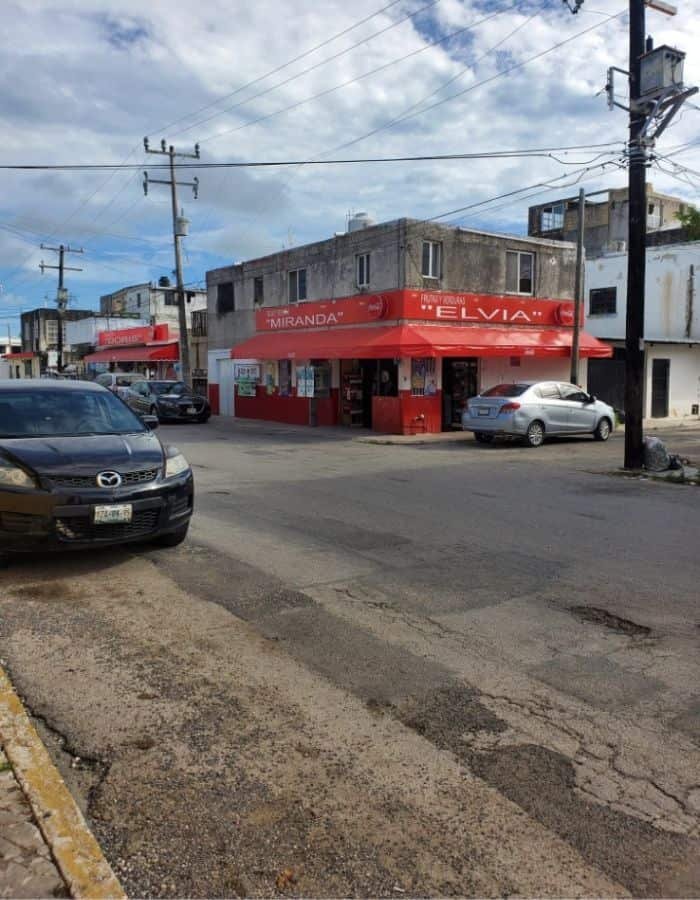
I thoroughly enjoyed my time living in Cancun. I had visited before, but being a tourist is far different than living here as a digital nomad. I loved living among the locals and eating where they eat.
The people were very friendly. I never felt unwelcome. I always felt safe and content.
Need help getting (and staying) organized while you travel? Download a free travel planner and make your life that much easier.
Related Posts
- Where to Live in Mexico: The Ultimate Digital Nomad’s Guide
- Navigating the World of Digital Nomad Housing
- Best Spaces for Coliving in Mexico
- Guide to Getting Through Cancun Customs Quickly and Easily
- How to Get to Cozumel From Cancun – and Back Again
- Living in Cozumel, Mexico: Ultimate Digital Nomad Guide
- Cancun or Cozumel: Which is Better for Your Vacation?
- Most Dog-Friendly Cities in the World
- Guide to Traveling with a Dog in Mexico
- Dog-Friendly Cities in Mexico
Pro Tips for Your Mexico Trips
Do I need travel insurance?
YES. No matter when you visit Mexico, don’t forget to buy travel insurance. It’s a small price to pay for peace of mind. If you need it once it will pay for itself many times over. I highly recommend Safety Wing. They have a proven track record for customer satisfaction and a variety of coverage levels.
Is it safe to rent a car in Mexico?
YES. Renting a car in Mexico is not only safe, but it’s a great way to explore. Discover Cars is hands down the best rental car company. They check international and local companies to get you the best rates.
Will my phone work in Mexico?
Maybe — It depends on your company, so check with your provider. If you don’t have free service in Mexico, the least expensive option is to buy a Telcel SIM card. As Mexico’s largest carrier, Telcel has the best coverage of any Mexico SIM Cards. I have one and it’s been a lifesaver.
You can also get an eSIM. Airalo has coverage in over 200 countries/regions, including Mexico.
What’s the best way to book my Mexico accommodations?
For Mexico hotels, Booking.com is the best site, but for hostels, check out Hostel World. If you’re considering a Mexico Airbnb, don’t forget to check VRBO, which is often cheaper with more options.
What do I pack for Mexico?
My Mexico packing list has all the info you need on packing for your trip to Mexico.
What’s the best site for great deals on flights to Mexico?
For finding cheap Mexico flights, I recommend using Skyscanner.
Do I need a visa for Mexico?
Probably Not. U.S., Canadian, and most European passport holders don’t need a visa for Mexico. To verify if you’ll need a Mexico travel visa check the Mexican Consulate’s website.
For assistance with all your worldwide visa questions, check out iVisa.
