
31 Best Cozumel Reefs for Diving and Snorkeling
If you’re wondering which Cozumel reefs are worth your dive or snorkel time, you’re in the right place.
I lived in Cozumel for almost two years and have been diving for over 15. I’ve seen the good, the bad, and the “why did I even get in the water today” kind of dives.
And let me tell you, Cozumel has some of the best diving in the world, but that doesn’t mean every site is right for every diver.
Some sites are great for beginners, others are more advanced, and a few will kick your butt if you’re not ready.
The key is choosing a dive that matches your skill level without sacrificing the experience you’re after.
Whether you’re a beginner or a pro, I’ll walk you through the best reefs in Cozumel and help you figure out which ones are worth your time.
Why Cozumel’s Reefs Are So Unique
Back in the 1960s, Jacques Cousteau raved about Cozumel, and honestly, he wasn’t exaggerating. These reefs are part of the Mesoamerican Barrier Reef, the second-largest reef system in the world.
Here’s what makes diving in Cozumel so different:
- The drift diving: You’re basically floating along in a gentle current while the reef drifts by like an underwater conveyor belt. It’s low effort, high reward.
- The biodiversity: You’ll see more than 500 types of fish and 60 species of coral.
- The visibility: On a good day, you can see 100 feet or more. Even in the “bad” seasons, the visibility is still better than a lot of other popular dive spots.

Choosing the Right Dive or Snorkel Site
Your dive site should match your comfort level, not just your certification. Cozumel has everything from shallow coral gardens to deep walls with wild currents.
Conditions change depending on weather, so it’s always smart to chat with your dive shop before heading out.
What follows is a list broken down by experience level, starting with beginner-friendly reefs.
Best Cozumel Reefs for Beginner Divers and Snorkelers
These sites are suitable for novices due to shallower depths, lighter currents, or being more accessible for snorkeling and introductory dives.
1. Balones of Chancanab
Just south of Chankanaab Park and about 350 yards from shore, Balones of Chankanaab sits at 60 to 70 feet deep and works for both beginners and experienced divers.
What makes it special is the balloon-shaped coral heads, huge, rounded structures that create natural shelter for all kinds of marine life.
You’ll probably spot lobsters, crabs, and plenty of tropical fish weaving in and out of the coral.
It’s an easy dive, but still interesting enough that experienced divers won’t get bored.
Visibility is usually great, and it’s a good spot if you want a calm dive with a lot to see.
2. Broken Reef (The Little Horseshoe)
This site gets its name from its horseshoe-shaped coral layout, which gives it a unique underwater topography. It’s usually calm, with little current and crystal-clear visibility.
Expect coral ridges, small canyons, and even a few caverns. It’s peaceful and quiet, especially compared to the more popular reefs, and that makes it ideal for underwater photography or just enjoying the view without a lot of distractions.
You’ll see small tropical fish and occasionally something larger gliding through. Great for beginners, snorkelers, or anyone looking for a mellow, scenic dive.
3. Chankanaab Reef
This reef is located just off the coast from Chankanaab Park and sits at a max depth of around 55 feet, which makes it perfect for beginners or even first-time divers.
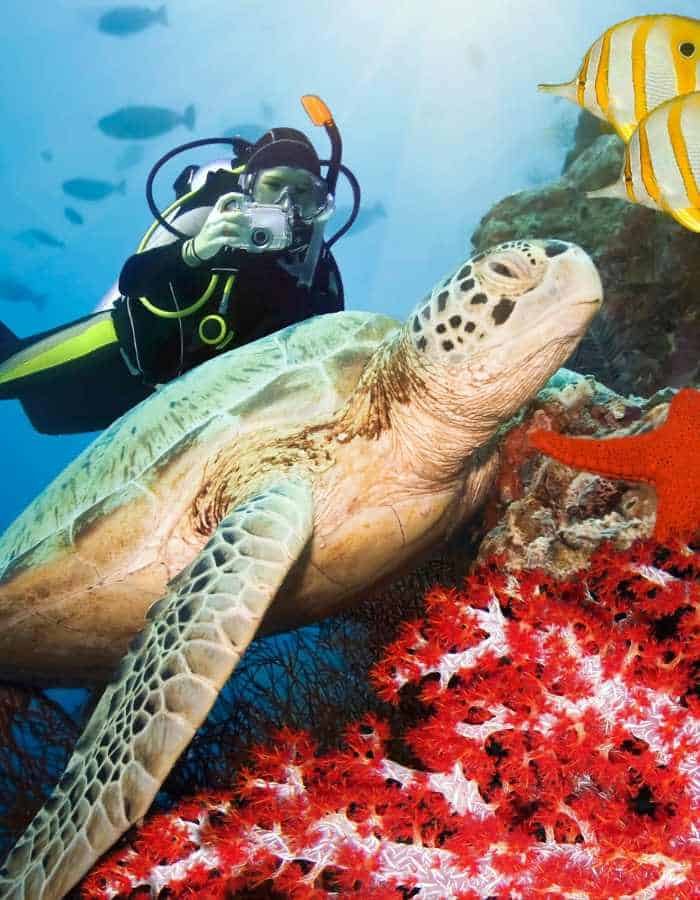
It’s known for its bright coral formations and high chance of spotting sea turtles. The reef is also home to colorful fish and sometimes eagle rays, depending on the day.
It’s close to shore, relatively shallow, and usually has calm conditions, so it’s also a great place to snorkel if you’re not diving.
4. Columbia Shallows
Columbia Shallows is one of the best spots for beginners or anyone who just wants a nice, laid-back dive. It ranges from 20 to 30 feet deep and is full of huge coral formations that are just stunning.
You’ll see beautiful coral heads, lots of fish, and the occasional sea turtle or eagle ray.
The visibility is usually excellent, and the shallow depth means you get more time to explore.
That said, the current here can surprise you. It’s not usually dangerous, but it can be tricky if you’re not used to it. Still, it’s absolutely worth it for the scenery alone.
5. La Francesa Reef
Tucked away in a less-trafficked part of the island, La Francesa offers a great intro to Cozumel’s reef system.
The depth ranges from 15 to 40 feet, and currents are generally light. This site is perfect if you want a calm, colorful dive with minimal hassle.
You’ll swim through schools of fish and might see rays or turtles gliding through. The reef’s shallow depth and soft lighting make it a good spot for underwater photography, too.
It’s easy to navigate and offers that peaceful, meditative dive experience.
6. Palancar Gardens
Part of the famous Palancar Reef system, this one is the gentlest of the bunch. It’s ideal for beginners but still scenic enough to keep experienced divers entertained.
You’ll find colorful coral formations, sandy swim-throughs, and lots of light, almost like diving through a living aquarium.
There’s minimal current, and the coral formations are spaced in a way that gives you plenty of room to explore at your own pace.
7. Palancar Shallows
If you’re just starting out or want a longer dive without going too deep, Palancar Shallows is a good ption.
Depths range from 20 to 70 feet, with most of the interesting stuff around the middle range.
You’ll float past coral towers, sandy patches, and schools of fish. It’s also a decent spot to catch sight of larger species like barracuda or pelagic fish, especially in deeper sections.
Just know that it’s a popular spot, so it can get a little crowded. The good news is that it’s a large area, so you can usually find space to enjoy the dive without feeling cramped.
8. Paradise Reef
Paradise Reef is super accessible and generally sits between 30 and 50 feet deep. It’s split into three sections, and each one has something different going on.
You’ll spot everything from parrotfish to sea turtles, and if you go at night, you’ll see a completely different world with octopus, sleeping fish, and glowing plankton.
Because it’s easy to get to and beginner-friendly, it does get busy. But if you’re willing to share the water, it’s a great first dive or snorkel spot.

9. Paso El Cedral
This one’s a crowd-pleaser, suitable for just about anyone. Depths range from 15 to 60 feet, and the dive is usually relaxed, though the occasional current can keep you on your toes.
You’ll see a mix of coral, sponges, and sandy areas with little critters like blennies or shrimp.
You also might see nurse sharks or big green moray eels tucked into the rocks. It’s also a good macro dive for photographers looking for smaller subjects.
10. San Francisco Reef
San Francisco Reef has a little bit of everything, including soft coral, sea turtles, rays, and loads of tropical fish.
Depths range from 20 to 60 feet, so it’s manageable for most skill levels. It’s a good place for both diving and snorkeling.
The reef gradually slopes down, so you can start shallow and go deeper if you feel comfortable.
The current can get a little stronger here, so always double-check with your dive guide before jumping in.
11. Santa Maria Reef
Santa Maria Reef is a good choice for new divers who want something easy but still beautiful. Depths range from 20 to 60 feet, and the visibility is typically excellent.
The coral gardens here are colorful and healthy, home to fish, rays, and sometimes turtles.
There are sandy patches between the coral heads that make navigation easy, and the whole site is very photo-friendly.
If you’re new and want something calm with plenty of sea life, this one’s worth doing.
12. Villablanca Reef
Villablanca Reef is super convenient and close to shore, which makes it great for shore dives or quick boat trips.
The reef ranges from 30 to 100 feet, so you can choose your depth depending on experience.
It’s known for a mix of coral gardens and walls, so you can start shallow and go deeper if you’re feeling confident.
You’ll likely see sea fans, sponges, and lots of small reef fish. Visibility can vary, especially if there’s been recent weather, but overall it’s an easy and flexible spot.

13. Villablanca Wall
Villablanca Wall starts at around 30 feet and drops well past 100 feet. The top part of the wall is ideal for beginners or divers who want to stay shallow, while the deeper areas give more experienced divers something to get excited about.
Expect dramatic drop-offs, coral-covered ledges, and plenty of marine life like eagle rays, turtles, and big schools of fish.
Just keep an eye on the current as it can pick up as you get deeper.
Best Cozumel Reefs for Intermediate Divers
These reefs offer more challenging conditions with moderate depths and currents, suitable for divers with some experience.
14. Big Horseshoe
Big Horseshoe is named for the massive, U-shaped coral structure that dominates the site. Depths range from 40 to 100 feet, and this site is best tackled with a bit of experience.
You’ll weave through coral tunnels, drift past tall coral towers, and maybe spot a passing shark or two. Groupers, eels, and schools of fish hang around the structure, using it as shelter.
The currents can get strong here, which is part of what makes it so good for drift diving, but it also means you should be confident navigating changing conditions.
15. Cedral Wall
This one’s for divers who want a little bit of everything. It’s got walls, depth, drift, and wildlife. Cedral Wall starts at about 30 feet and drops past 100.
The wall itself is full of color, with sponges, sea fans, and coral covering every inch.
Turtles and groupers are common, and it’s one of the best places to see moray eels just chilling in their hideouts. If you’re lucky, you might catch sight of eagle rays or even a reef shark cruising by.
You’ll want to be comfortable in stronger current and ready to go with the flow. It’s a classic Cozumel wall dive and one of the more exciting mid-level options.
16. Columbia Reef
Columbia Reef stretches from about 20 to 100 feet and includes a little of everything. You’ll find towering coral pinnacles, sandy bottoms, and narrow swim-throughs.
This site is full of life. Expect to see turtles, schools of tropical fish, and the occasional barracuda or nurse shark.
Some of the coral formations rise up 30 feet from the ocean floor, creating dramatic scenery that feels almost otherworldly.
Visibility is excellent, but current and depth can change quickly, so having a few dives under your belt is helpful.

17. Palancar Caves
Palancar Caves is one of the most visually striking dive sites in Cozumel. While it’s not a true cave dive, it feels like one thanks to its arches, overhangs, and deep coral buttresses.
Depths typically range from 50 to 100 feet. Shafts of sunlight beam through the cracks, creating an unreal, almost cathedral-like effect.
This site isn’t for brand-new divers, though. You’ll need steady buoyancy control and good awareness, especially when navigating through the tighter spaces.
18. Punta Francesa
Punta Francesa is a quieter dive site, but it offers a beautiful, relaxing drift with good visibility and moderate depths between 20 and 60 feet.
The reef is full of healthy coral and tropical fish, and it’s common to spot rays or turtles gliding past.
The current is usually mild, making this a great place to slow down and enjoy the scenery without having to work too hard.
It’s an underrated gem and a nice break from the more crowded sites.
19. Santa Rosa Reef
Santa Rosa Reef is a go-to for divers who want a bit of everything. This site has tunnels, coral ridges, and swim-throughs that keep things interesting from start to finish.
Depth ranges from 15 to just over 100 feet, so you can adjust based on your experience and dive plan.
You’ll see angelfish, groupers, sea turtles, and sometimes a surprise appearance from a ray or small shark.
The reef’s structure offers plenty to explore, but some sections are narrow, and the current can get strong.
It’s a fantastic dive for those who feel comfortable navigating a slightly more complex site.
20. Santa Rosa Wall
Santa Rosa Wall is one of Cozumel’s most iconic dive sites, and it’s often a favorite for good reason.
This wall starts at around 50 feet and drops into the deep blue, making it both thrilling and beautiful.
You’ll drift along the edge of the wall with coral formations on one side and open ocean on the other.
What makes Santa Rosa Wall special is the variety. You’ll get tunnels, overhangs, big sponges, and lots of sea life.
Expect to see groupers, turtles, moray eels, and sometimes eagle rays. The current can be strong and quick, so you’ll need to stay aware and be comfortable drifting.
This site is best for divers who are solid on buoyancy and ready for a bit more excitement.
21. Tormentos Reef
Tormentos is a fast-moving, fish-packed drift dive with depths between 40 and 70 feet. The current here is no joke, which makes it ideal for divers looking for something a little more exhilarating.
You’ll fly over beautiful coral ridges packed with marine life. There are snappers, grunts, moray eels, and the occasional turtle or ray.
The reef is healthy and colorful, and the steady current helps keep visibility clear. Because of the speed, this isn’t a dive where you stop and hover. You’re along for the ride, so get ready to go with the flow.

22. Yucab Reef
Yucab is a long, narrow reef with a consistent current that makes it perfect for a smooth drift dive.
Depths range from 30 to 60 feet, and the reef is full of color. There’s dense coral, lots of sea fans, and constant movement from schools of tropical fish.
It’s a reliable spot for seeing turtles and rays, and sometimes even the splendid toadfish if you know where to look.
The current can get unpredictable at times, so this one’s better for divers who have experience staying relaxed and controlled during fast-moving dives.
It’s a popular reef, but because of its length, you can usually find some space to enjoy the view.
Best Cozumel Reefs for Advanced Divers
These sites are for confident divers who are experienced with drift diving, deeper water, or more complex navigation. You’ll need good air management, strong situational awareness, and comfort with current.
23. Barracuda Reef
Barracuda Reef is not for the faint of heart. Located on the island’s northern tip, this site has strong currents, deep water, and open ocean exposure. Depths often exceed 100 feet.
This is where you go when you’re looking for big marine life. Barracudas are common here, but you might also spot sharks, eagle rays, or schools of jacks.
The current can change quickly and run fast, so this is only for divers who know how to handle themselves in unpredictable conditions.
Because of its challenges, it’s less frequently visited, which means a more untouched experience when you go.
24. Chun Chakaab
Chun Chacaab is lesser-known but well worth the dive if you’re looking for something a little different. It’s generally quiet and more off the radar, so you’re likely to have the reef mostly to yourself.
The depth ranges from 30 to 80 feet, with varied terrain that includes coral heads, sandy stretches, and ledges. You’ll see sponges, reef fish, and maybe a passing ray or turtle.
Currents can vary from mild to strong, so it’s best suited for intermediate to advanced divers. It’s a solid choice if you want something beautiful and slightly off the beaten path.
25. Deep Palancar
Deep Palancar is exactly what it sounds like, a deeper section of the famous Palancar Reef system.
It starts around 60 feet and drops beyond 100. This dive is all about dramatic coral spires, steep drop-offs, and the chance to see larger species like turtles, eagle rays, and even sharks.
The formations here are impressive and make for great wide-angle photos. Visibility is usually excellent.
You’ll want to be comfortable with both depth and current, and stay on top of your no-deco limits.
26. The Little Caves
The Little Caves is a maze-like reef full of tight swim-throughs and small caverns carved into the coral. It sits between 50 and 90 feet and is ideal for experienced divers who enjoy exploring nooks and tunnels.
You’ll see lobsters, nurse sharks, and lots of smaller reef fish in the crevices. This site demands solid buoyancy and spatial awareness.
It’s not a place to rush. If you like taking your time and exploring up close, this one is a lot of fun.
27. Maracaibo Reef
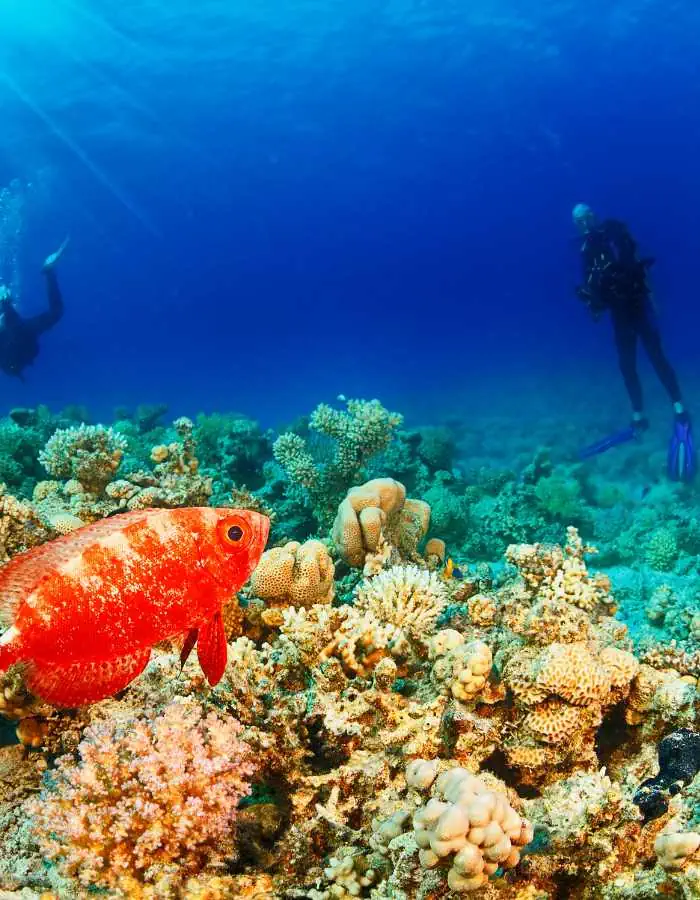
Maracaibo is one of the most advanced dives in Cozumel. It starts around 80 feet and drops steeply into deep blue water beyond recreational diving limits.
It’s located at the southern end of the island and is known for strong currents and massive vertical walls.
Marine life is impressive. You may see sharks, eagle rays, huge sponges, and dramatic coral structures.
Visibility is often outstanding, giving you sweeping views of the wall and open ocean.
This site is intense, isolated, and rarely crowded. It’s perfect for seasoned divers who want a serious adventure.
28. Punta Sur (Devil’s Throat)
Punta Sur is best known for the Devil’s Throat, a narrow tunnel that drops from about 80 to 130 feet before opening up into a cavern with dramatic lighting and ancient-looking stalactites.
The full site ranges from 50 to 80 feet in most areas and includes coral gardens outside the tunnel.
While Devil’s Throat gets all the attention, the whole area is worth exploring. This dive requires advanced certification, solid control, and the ability to stay calm in tight, dark spaces.
It’s an iconic dive and definitely not one to do without a qualified guide.
29. San Juan Reef
San Juan is on the northern side of the island and is one of Cozumel’s hidden gems. With depths ranging from 45 to over 100 feet and strong open-ocean currents, this reef is not for beginners.
The marine life here is next level. You might see sharks, eagle rays, and schools of pelagic fish thanks to the nutrient-rich water pulled in by the current.
The reef is full of color and large coral formations, and because it’s out of the way, you’ll likely have it to yourself.
This dive is rewarding but can get intense, so you’ll want to be confident with both drift diving and depth.
30. Virgin Wall
Virgin Wall lives up to its name. It’s pristine, quiet, and absolutely stunning. The wall starts around 50 feet and drops far deeper, with colorful sponges, sea fans, and hard coral covering every inch of the vertical face.
Visibility is often excellent, and you’ll probably see turtles, nudibranchs, rays, and maybe a shark in the blue.
Because of its location and conditions, Virgin Wall is rarely crowded, making it a peaceful and immersive dive.
That said, strong currents and the vertical drop make it a place for advanced divers who are used to more technical environments.
Frequently Asked Questions: Cozumel’s Reefs
What is drift diving?
Drift diving is a type of scuba diving where divers are carried by the water’s current, allowing for effortless exploration of underwater landscapes without the need to swim against the flow.
What are the best Cozumel reefs for beginner divers?
Beginners should consider reefs like Paradise Reef, Columbia Shallows, and Chankanaab Reef, which offer shallower depths, lighter currents, and are more accessible for snorkeling and introductory dives
Can I see the splendid toadfish in Cozumel?
Yes, the splendid toadfish, which is endemic to Cozumel, can often be found in reefs like Paradise Reef and Chankanaab Reef.
What is the best time of year to dive in Cozumel?
Cozumel can be dived all year round, with water temperatures varying between 26ºC and 31ºC. Visibility ranges from 40ft in winter to 190ft in summer, making any season a good time to dive, though conditions can vary.
Are there any conservation efforts for Cozumel’s reefs?
Yes, Cozumel has protected areas focused on reef conservation, such as the Cozumel National Marine Park, to preserve the biodiversity and beauty of the reefs for future generations.
Is there cave diving in Cozumel?
Cozumel itself is not known for cave diving. Its allure lies in coral reef and wall dives. However, the nearby Yucatán Peninsula on the mainland offers world-renowned cenotes for cave diving, blending the thrill of exploration with the beauty of underwater caverns.

Wrap-Up: Cozumel Reefs
If you’re wondering whether Cozumel really lives up to the hype for diving, the answer is yes.
There’s a huge variety of reefs, each with its own personality. Some are mellow and easy, others are deep and wild, and plenty sit right in the middle.
The visibility is consistently excellent, the coral is in good shape, and the marine life is diverse enough to keep even long-time divers coming back.
Even after 15 years of diving, I still find new things to get excited about. I’m still hoping to spot a seahorse and am always on the lookout for the splendid toadfish. And I’m half-hoping to see a hammerhead shark.
No matter your skill level, Cozumel has something for you. Just pick the right reef for your experience, check in with a solid dive shop, and you’ll be set for some unforgettable dives.
Related Posts
- Inside the Cozumel National Marine Park
- Cozumel Diving: The Complete Guide
- 7-Day Cozumel Itinerary: Travel Guide By a Local
- One Day in Cozumel: Ultimate Guide
- Paradise Beach Cozumel Review and Tips
- Atlantis Submarine Cozumel Review & Tips
- Is Cozumel Worth Visiting?
- What is Cozumel Known For?
- How to Get From Tulum to Cozumel
- Cozumel vs. Playa del Carmen: Which is Better?
- Cozumel vs. Isla Mujeres: Which is Better?
Pro Tips for Your Mexico Trips
Do I need travel insurance?
YES. No matter when you visit Mexico, don’t forget to buy travel insurance. It’s a small price to pay for peace of mind. If you need it once it will pay for itself many times over. I highly recommend Safety Wing. They have a proven track record for customer satisfaction and a variety of coverage levels.
Is it safe to rent a car in Mexico?
YES. Renting a car in Mexico is not only safe, but it’s a great way to explore. Discover Cars is hands down the best rental car company. They check international and local companies to get you the best rates.
Will my phone work in Mexico?
Maybe — It depends on your company, so check with your provider. If you don’t have free service in Mexico, the least expensive option is to buy a Telcel SIM card. As Mexico’s largest carrier, Telcel has the best coverage of any Mexico SIM Cards. I have one and it’s been a lifesaver.
You can also get an eSIM. Airalo has coverage in over 200 countries/regions, including Mexico.
What’s the best way to book my Mexico accommodations?
For Mexico hotels, Booking.com is the best site, but for hostels, check out Hostel World. If you’re considering a Mexico Airbnb, don’t forget to check VRBO, which is often cheaper with more options.
What do I pack for Mexico?
My Mexico packing list has all the info you need on packing for your trip to Mexico.
What’s the best site for great deals on flights to Mexico?
For finding cheap Mexico flights, I recommend using Skyscanner.
Do I need a visa for Mexico?
Probably Not. U.S., Canadian, and most European passport holders don’t need a visa for Mexico. To verify if you’ll need a Mexico travel visa check the Mexican Consulate’s website.
For assistance with all your worldwide visa questions, check out iVisa.
