
How to Help Dogs With Car Anxiety
Up to 70% of dogs show signs of anxiety in the car. That’s a lot of nervous pups. From the engine noise to the motion, what feels like a quick drive to us can feel overwhelming for them.
The good news is there are plenty of things you can do to help dogs with car anxiety feel safe, calm, and maybe even enjoy the ride.
What Car Anxiety Looks Like in Dogs
If your dog starts drooling, panting, or shaking the second you grab your keys, you’re not imagining things. Car anxiety is real and often confused with motion sickness, especially in puppies.
While the symptoms look similar, the solutions are different. Motion sickness often fades with age. Anxiety needs a bit more support.
Common signs to watch for:
- Heavy drooling or panting
- Shaking, whining, or barking
- Trying to hide or escape
- Vomiting or refusing to get in the car
Shelby’s Story
My dog, Shelby, is a 12-pound Yorkipoo. She’s been my travel dog her entire life. She loves airplanes, boats, and even trains.
But Shelby hates the car. She pants for most of the drive. It’s the same if a passenger is holding her or if she’s in the back seat with her seatbelt on.
I’ve tried most of the things on this list and finally found the right combination for her. It took a lot of trial and error, but now I don’t feel bad when I have to load her up in the car.

Tips to Help Your Dog’s Car Anxiety
Here are some ways to help your dog enjoy car rides more. Or at least bring the stress level down.
1. Set the Car Up for Comfort
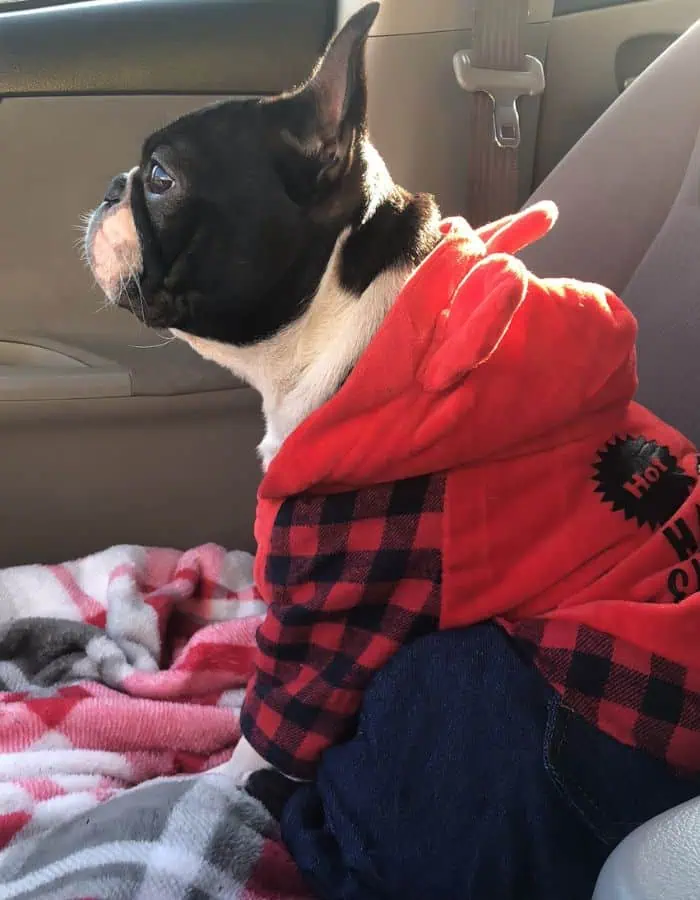
Your dog will feel more at ease if they have a spot that feels familiar and secure. That could be a booster seat, a travel crate, or a seatbelt harness paired with a cozy blanket from home.
Things that help make the car feel safe:
- A blanket, bed, or crate they already love
- Something with your scent, like an old T-shirt
- An anti-anxiety wrap like the Thundershirt
- Familiar chew toys or a frozen Kong (just skip the squeaky ones for your own sanity!)
2. Ease Into Car Rides
Don’t just toss your anxious dog in the backseat and hope for the best. If they’re already nervous, start small and build up.
A gradual approach works best:
- Let your dog explore the parked car with the doors open
- Give treats and praise when they stay calm
- Sit inside the car together without starting the engine
- Take short drives around the block and build up from there
You’re helping them form new, positive associations with the car. It may take some time.
3. Calming Aids That Can Help
Some dogs need a little extra help to settle down. Calming supplements, sprays, or essential oils can ease the edge. Just check with your vet before introducing anything new.
Options to consider:
- CBD oil, with vet approval
- L-theanine, melatonin, or calming chews
- Lavender or chamomile aromatherapy (use sparingly)
- Calming sprays for bedding or crate
Always test new remedies at home first. And check with your vet before trying any supplements or medications.
4. Burn Off Some Energy First
A little exercise before travel can go a long way. It doesn’t need to be intense, just enough to release a bit of nervous energy.
Try these ideas:
- A short walk or game of fetch
- Puzzle toys or mental games before the drive
- A treat-dispensing toy to keep them busy on the road
If you don’t want to buy fancy toys, roll up some kibble or treats inside a towel. This works great for Shelby.
5. Reinforce the Calm with Training
Training helps your dog know what to expect. Start with basic, calm behaviors at home, then move them into the car.
Helpful training tips:
- Reward calm behavior near and inside the car
- Use treats they only get during travel
- Practice a “settle” cue on a mat, then transfer that skill to the car
- Gradually introduce new distractions like engine noise
Be consistent, keep it fun, and don’t rush it.
Professional options to explore:
- Talk to your vet about medication for travel
- Rule out underlying health problems
- Work with a certified behaviorist, either in person or virtually
Needing help doesn’t mean you’re failing. It means you’re doing what’s best for your dog.
6. Know When to Call in Backup
If your dog stays anxious no matter what, it might be time to bring in extra help. Some dogs need more support than basic training or natural remedies can provide.
7. During the Ride: Keep It Calm and Steady
Once you’re on the road, your energy matters. Dogs pick up on your mood, so staying relaxed helps them relax too.
Tips for a smoother drive:
- Feed your dog 3 to 4 hours before travel
- Offer small sips of water at rest stops
- Take breaks every couple of hours for stretching and potty time
- Use white noise or soft music to block out stressful sounds
A calm routine on the road builds trust over time.
8. Pack These Essentials for a Smooth Trip
Being prepared makes everything easier. Keep a go-bag packed with your dog’s must-haves so you’re always ready.
What to bring:
- Water and a collapsible bowl
- Waste bags and wipes
- A favorite toy or blanket
- Any needed meds or calming aids
- Printed vet records
- A window shade for sun protection
Better to have it and not need it than the other way around.

9. Celebrate the Wins
Progress can be slow, but it’s happening. Keep track of little victories, like the first time your dog didn’t drool or the first drive where they settled quickly.
Here’s how to build momentum:
- Keep a simple log of what works
- Change up the scenery now and then to boost confidence
- Reward progress with treats, praise, or extra playtime
Those tiny improvements stack up fast.
10. When It’s OK to Just Stay Home
Not every dog is meant to be a road trip buddy. While most dogs can learn to tolerate or even enjoy car rides with the right training and support, some may never fully acclimate.
If you’ve tried everything and your dog is still showing extreme signs of panic or distress, it may be time to reconsider if travel is the right fit for them.
Here’s how to know when it might be better to leave your dog at home:
- Your dog’s anxiety doesn’t improve despite consistent training and support
- They refuse food, shut down, or show signs of trauma after car rides
- Medication or behavior therapy hasn’t made a noticeable difference
- They can’t settle even on short rides, and it’s impacting their well-being
There’s no shame in recognizing your dog’s limits. If travel continues to cause more harm than progress, they may be happier staying home with a trusted sitter, friend, or in-home boarding setup.
TrustedHousesitters is a great option. You get a free house and dog sitter, and they get a free place to stay.

Wrap-Up: Helping Dogs With Car Anxiety
So what finally worked for Shelby? She is happiest in her carrier. She feels safe in the enclosed space, plus she associates it with airports (her favorite place in the world).
I leave the top open in case she wants to peek out the top. I attach the carrier with the seatbelt and hook Shelby up to her car tether in case she suddenly decides it would be more fun to climb up into the front seat.
I have also had some success with lavender oil. It helps calm her down. But only use a drop because it’s strong, and dogs’ noses are very sensitive.
There’s no one-size-fits-all solution. It may take a lot of time and experimenting to find the perfect combination for your dog.
Related Posts
- Guide to Planning a Road Trip With A Dog Without The Stress
- Flying Internationally With a Dog in the Cabin: What You Need to Know
- Best Dog-Friendly Hotel Chains in the United States
- Most Dog-Friendly Restaurant Chains in the United States
- Requirements for Bringing Dogs Into the United States
- Most Dog-Friendly Cities in the World
- The Best and Worst Dogs for Digital Nomads
