
Your Body May Show Early Warning Signs of Serious Health Decline. Starting in This Body Part

Most people don’t like to talk about death. It is somewhere between fear, curiosity, and mystery. People have tried to understand it in different ways over the years, including religion, philosophy, and more recently, science.
What’s interesting though is that some modern research suggests something a bit unexpected: our sense of smell might actually play a role in how we perceive death and even health decline.
It sounds strange at first, but there is ongoing discussion in medical and biological research about how the nose, yes the sense of smell, could be connected to both detecting serious illness in others and also acting as an early warning system for our own health.
Smelling Death: A Sixth Sense or Just Coincidence?
There have been many stories over the years of people claiming they noticed a strange or unusual smell before someone passed away. Not everyone believes these stories of course, and some may just be memory or emotion playing tricks. But still, the consistency of these reports makes scientists at least curious.
Some scientists think that when the body starts to shut down, it might let go of some chemicals. Most people don’t notice these compounds’ smells, but they could be there. Some people say that it’s not really about “smelling death” directly, but more about the brain noticing small changes in the environment or emotions that we can’t fully explain.
There is also another idea, a bit more psychological, which says that humans are actually very sensitive to changes in behavior and environment around sick individuals. So what people describe as a smell might actually be a combination of subconscious signals being interpreted in a strange way.
Studies in animals add another layer to this discussion. Dogs, for example, are known to detect certain cancers and illnesses through smell. Some trained animals in hospitals and care homes have even been observed acting differently around patients who are critically ill. While this does not prove anything about humans sensing death directly, it does show that smell and chemical detection in living beings is more powerful than we usually think.
Losing Smell and What It Might Mean for Health
On the other side of this topic, there is something more scientifically supported. Losing your sense of smell, especially as you get older, can sometimes be linked to serious health conditions.
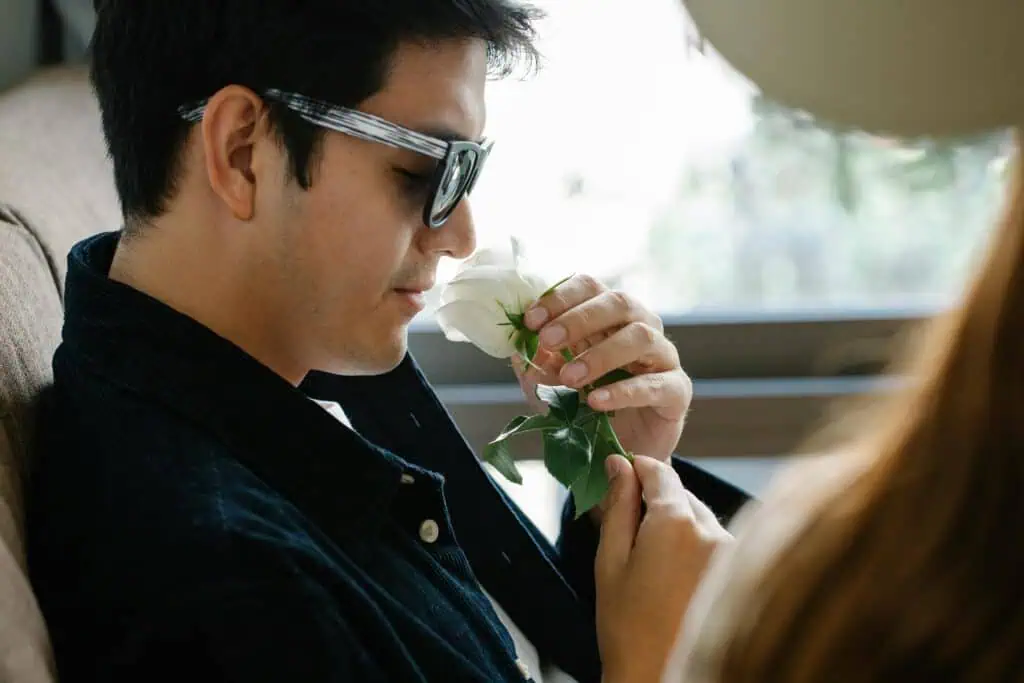
Research has shown that a reduced sense of smell may be associated with diseases like Parkinson’s and Alzheimer’s. In some cases, it even appears before other symptoms show up. That is why some doctors now consider smell testing as a small but useful indicator of neurological health.
There have also been studies suggesting that older adults who experience a decline in smell may have a higher risk of mortality over a certain period of time.
A large study even found that older people who had trouble smelling things were more likely to die within five years than those who could smell normally.
It could be allergies, infections, or just getting older. But it does suggest that fragrance is more crucial for health than most people realise.
Why Scientists Are Interested in Death and Smell
We still don’t know a lot about how the systems in the body work. The region of the brain that controls smell is connected to the parts that deal with memory and emotion.That’s one reason why odours can bring back memories or make you feel things deeply.

Because of this close link, scientists are looking into whether smell could be used to warn people about diseases or even the decline of their bodies. It’s still early in the research process, but it opens up some interesting possibilities.
Some scientists think that if we learn more about the chemical changes that happen in the body, we might be able to make tools that can find serious illnesses earlier by using smell-based tests or devices that work like smell detection.
It can be emotionally heavy and sometimes confusing because the changes are not always the same for everyone. Some people decline slowly over weeks, others change more rapidly.
A Few Weeks Ago
In the beginning, a person may start to pull away from their normal life. They might not be interested in food, talking, or things they used to like anymore. People often feel tired and weak, and sometimes they feel calm or disconnected.
Days Before
The signs get clearer as the time gets closer. They sleep more, talk less, and their bodies start to slow down. There are times when the person may seem confused or not fully there.People still think that hearing is active at this point, so it’s best to talk quietly and calmly.
Last Hours A lot of things happen in the last hours. It might get uneven or shallow. You might lose and regain consciousness, and your skin might feel cooler. Family members may find this stage very hard to watch, but the focus often shifts from medical care to comfort and being there.
What Happens After You Pass Away
After death, the body stops working. The body slowly changes, and the heart stops beating and breathing. Families are very emotional and personal at this moment.
Many people like to say goodbye or just be there for a few minutes of peace. There is no one right way to deal with grief; it looks different for everyone.
Why you should know this
It might be hard to talk about death, smell, and changes at the end of life, but it’s important. People can better understand their health and how they feel by learning about these things.
Knowing what to expect can help carers feel less scared and confused. It also helps you care for others and have more meaningful times when things are tough.
Final Thoughts
There is still a lot we don’t know about the human body, especially how senses like smell relate to health and death. Some scientific hypotheses are still being tested and have not yet been proven, but they are still interesting enough to warrant more research.
Taking care of a dying person also reminds us of something very human. It’s not just about science; it’s also about how you feel, being there, and making friends. If you’re helping someone who is sick or just trying to learn more about your own health, you need to know what’s going on.
The most important thing to learn may not be how to tell when someone is going to die, but how to pay more attention to the small things our bodies and senses tell us all the time.
